Harris-Stowe State University & the Henderson House Site
The history
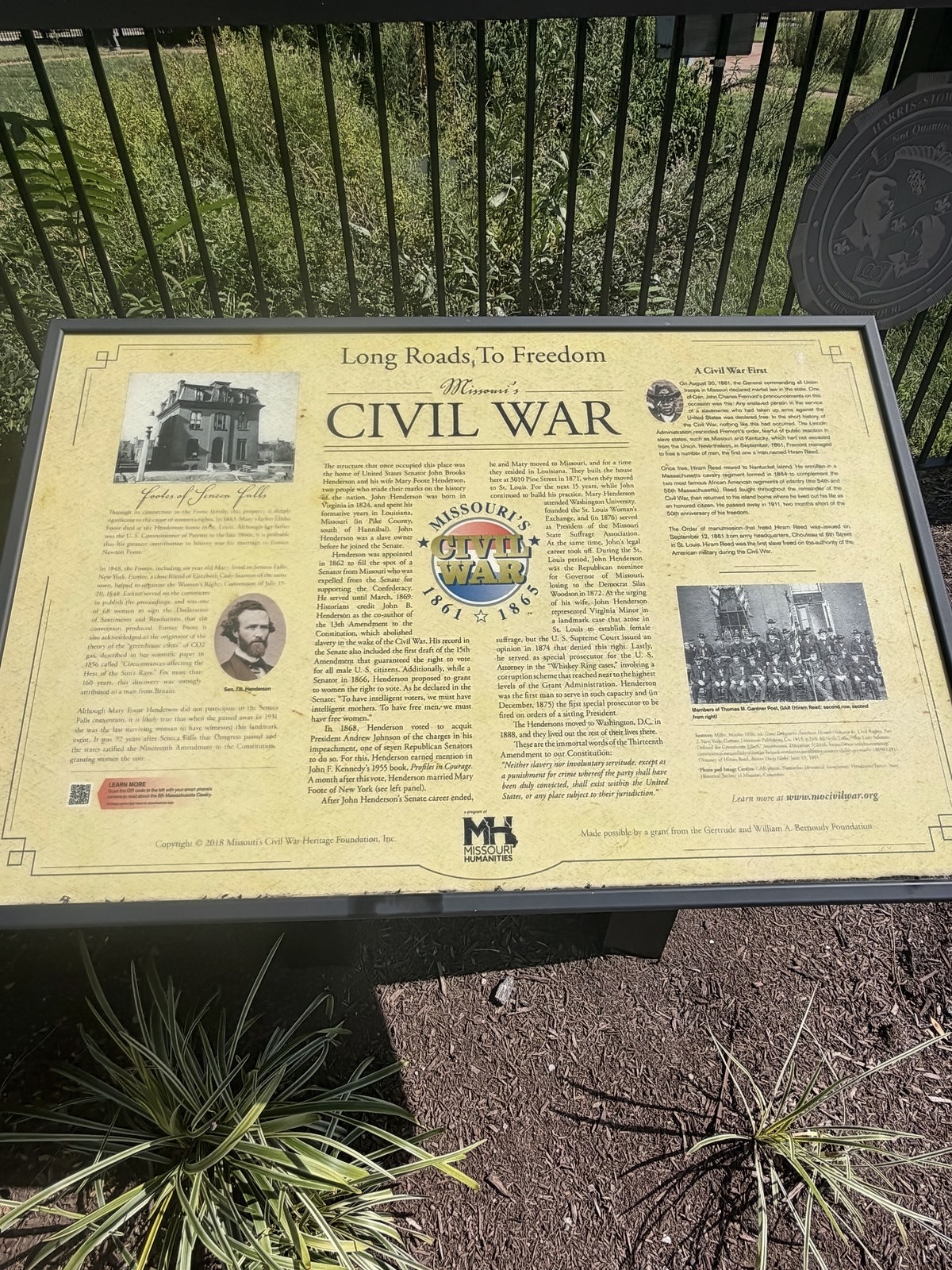
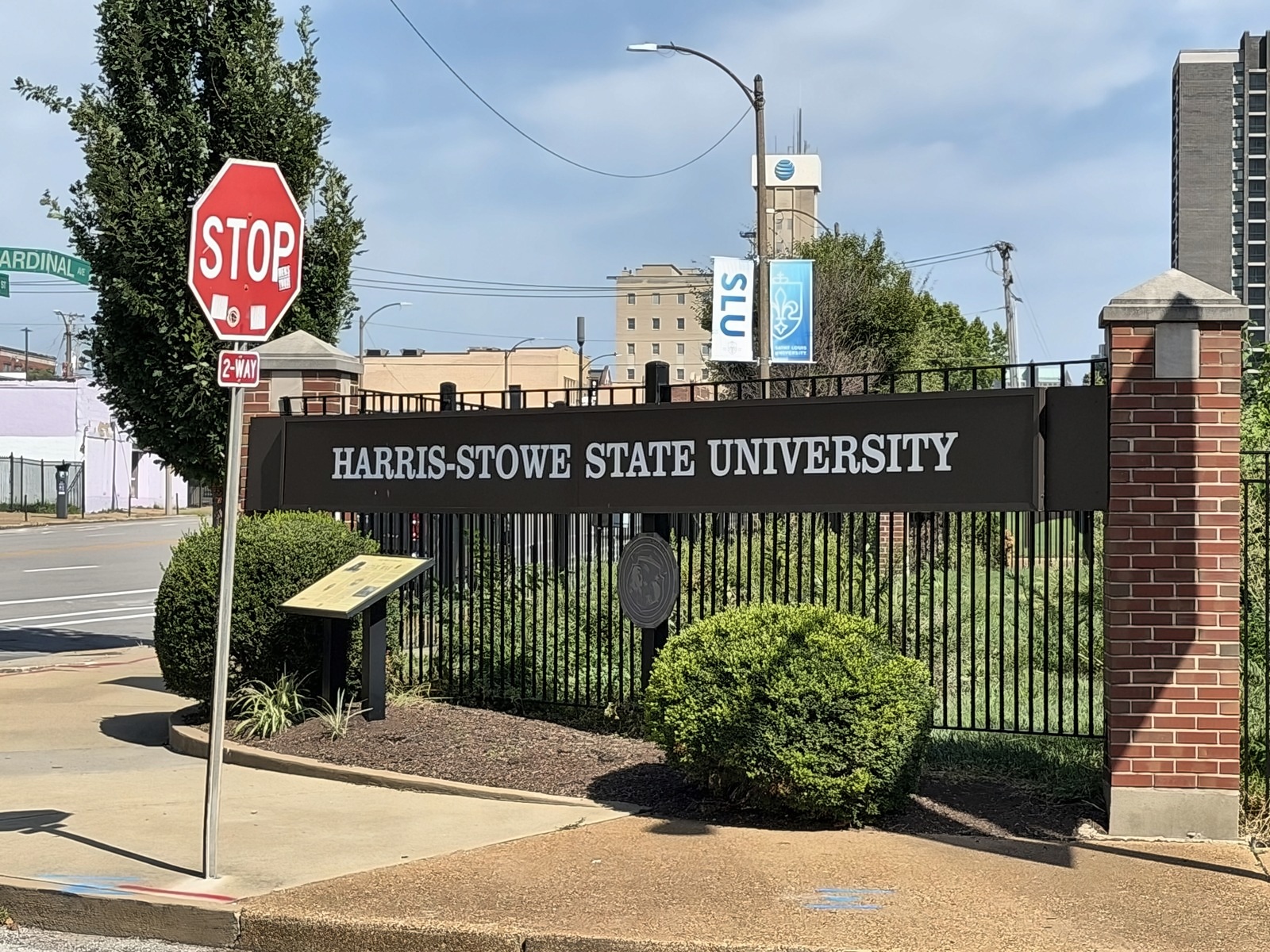
The campus gate at Cardinal and Pine, next door to Pappy's. Harris-Stowe began in 1857 as a normal school for the St. Louis Public Schools — the oldest public teacher-training institution west of the Mississippi and the twelfth oldest in the country. For a century it ran as two segregated colleges: Harris Teachers College for white students, and Stowe Teachers College, named for Harriet Beecher Stowe, for Black students. They were merged in 1954 after Brown v. Board, and it is a historically Black university today. The Missouri's Civil War marker on the fence records what stood on this ground before it. Senator John Brooks Henderson built his house at 3010 Pine in 1871. Henderson was appointed to the Senate in 1862 to replace a man expelled for supporting the Confederacy, and he is credited as co-author of the Thirteenth Amendment — the one that abolished slavery. He also drafted the first version of the Fifteenth, and in 1866 proposed giving women the vote: 'To have intelligent voters, we must have intelligent mothers. To have free men, we must have free women.' In 1868 he was one of seven Republicans who voted to acquit Andrew Johnson at his impeachment, which cost him his career and won him a chapter in Kennedy's Profiles in Courage. His wife Mary Foote Henderson founded the St. Louis Woman's Suffrage Association and, as a girl of ten, had been at Seneca Falls in 1848. The same marker carries Hiram Reed, who on 12 September 1861 became the first enslaved man freed on the authority of the American military, under Frémont's martial law order — Lincoln rescinded the order, but Frémont had already issued the papers. Reed went to Nantucket, enlisted in a Massachusetts cavalry regiment, fought the rest of the war and died in 1911, two months short of the fiftieth anniversary of his freedom.
My photos