Wineries 🍷
7 houses tasted at, 7 wines noted — what each estate is known for, and what was actually in the glass. This list grows every time I get up to the valley.
Napa, Sonoma & Livermore
- 1Gundlach Bundschu — Sonoma Valley, Sonoma, CA
- 2Cline Cellars — Los Carneros, Sonoma, Sonoma, CA
- 3Wente Vineyards — Livermore Valley, Livermore, CA — the estate on Arroyo Road
- 4Gloria Ferrer — Los Carneros, Sonoma, Sonoma, CA
- 5Domaine Carneros — Los Carneros, Napa, Napa, CA
- 6Trinitas Cellars — Napa Valley, Napa, CA — the estate cave at the Meritage Resort
- 7Silver Oak — Oakville, Oakville, CA
Gundlach Bundschu
Sonoma, CA · 1858 — Jacob Gundlach, a Bavarian brewer · Napa & Sonoma Wine Country
The oldest continuously family-owned winery in California, and still run by the sixth generation of the same family. Jacob Gundlach, a Bavarian brewer, bought the land east of Sonoma in 1858 and named it Rhinefarm; his daughter married Charles Bundschu, and the two names have been on the label ever since. The 1906 earthquake burned their San Francisco cellars and Prohibition shut the winery entirely — the family kept farming and selling fruit for fifty years, and Jim Bundschu only put the label back on a bottle in 1973. The 150-acre estate sits at the crossroads of the Sonoma Valley, Carneros and Napa Valley appellations, is Regenerative Organic Certified, and has a cave dug into the hill behind the tasting room and an amphitheatre in the vines that hosts the Huichica festival and the folkYeah! concerts.
From the archive
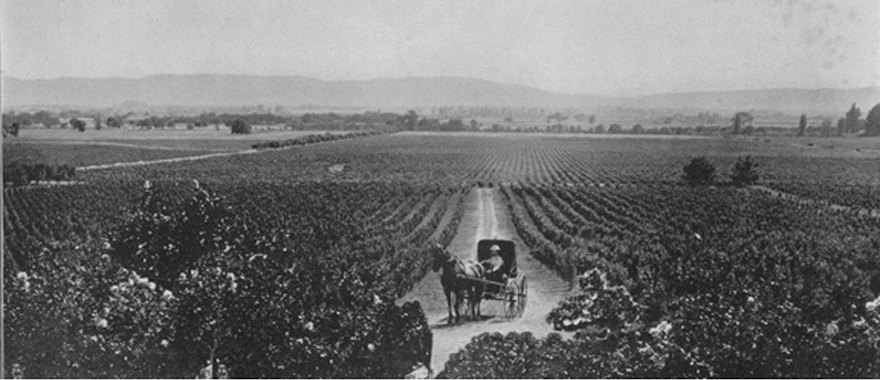
Then · c. 1900 A buggy in the Rhinefarm rows, looking out over Sonoma Valley — Gundlach Bundschu family archive
The story
Jacob Gundlach was a Bavarian brewer who came to San Francisco in the Gold Rush and decided the money was in wine, not gold. In 1858 he bought four hundred acres on the eastern edge of Sonoma Valley, planted vines from the Rhine and named the place Rhinefarm. It is the oldest continuously family-owned winery in California, and the sixth generation is running it now.
The second name arrived with Charles Bundschu, a young German who joined the firm and married Gundlach's daughter Francisca; by 1875 he was a partner and J. Gundlach & Co. had become Gundlach Bundschu. By the 1890s its Bacchus-labelled wines were being poured at the Midwinter Exposition in San Francisco and shipped as far as Hong Kong and Berlin.
Then it all came apart. The 1906 earthquake and fire destroyed the company's San Francisco cellars and the entire stock inside them; fourteen years later Prohibition closed the winery outright. The family did not sell. They farmed Rhinefarm for half a century, selling grapes to whoever was allowed to crush them, and did not put their own name back on a bottle until Jim Bundschu released the 1973 vintage.
What has followed is a winery that behaves like nobody else in Sonoma — a cave driven into the hill behind the tasting room, an amphitheatre down in the vines that hosts the Huichica festival and the folkYeah! concerts, and a run of self-deprecating posters that made the label famous long before the wine did.
Rhinefarm itself is farmed in sixty separate blocks and is now Regenerative Organic Certified. Below 150 feet the valley floor is Huichica clay-loam over old bay sediment, cool enough for Gewürztraminer, Chardonnay and Pinot Noir; above it the slopes of Arrowhead Mountain are volcanic ash and rock, and that is where the Cabernet, Merlot and Zinfandel are planted.
The archive · 5
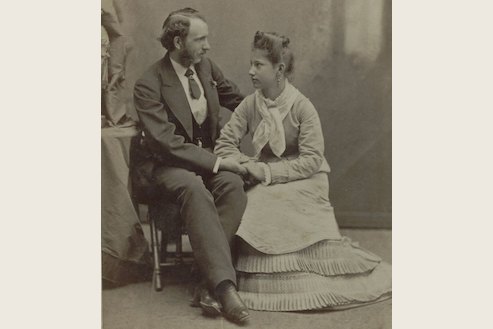
1868 — Charles Bundschu and Francisca Gundlach, before the two names became one 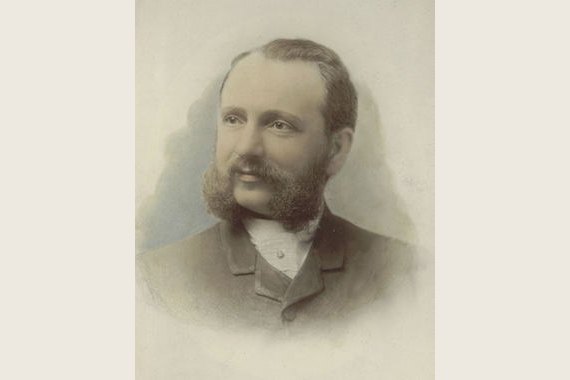
c. 1875 — Charles Bundschu 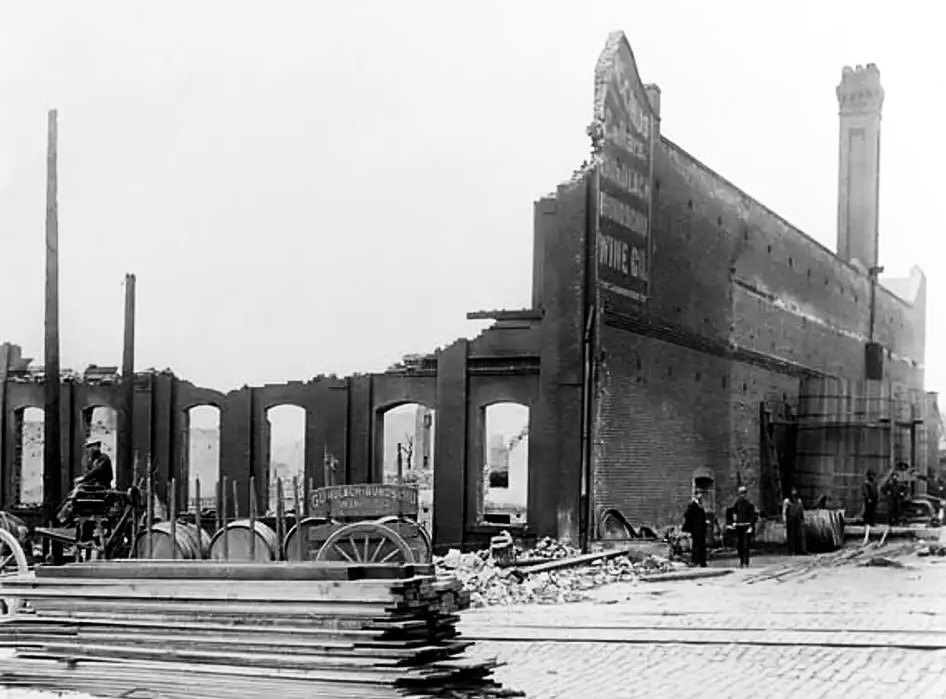
1906 — The San Francisco cellars after the earthquake and fire 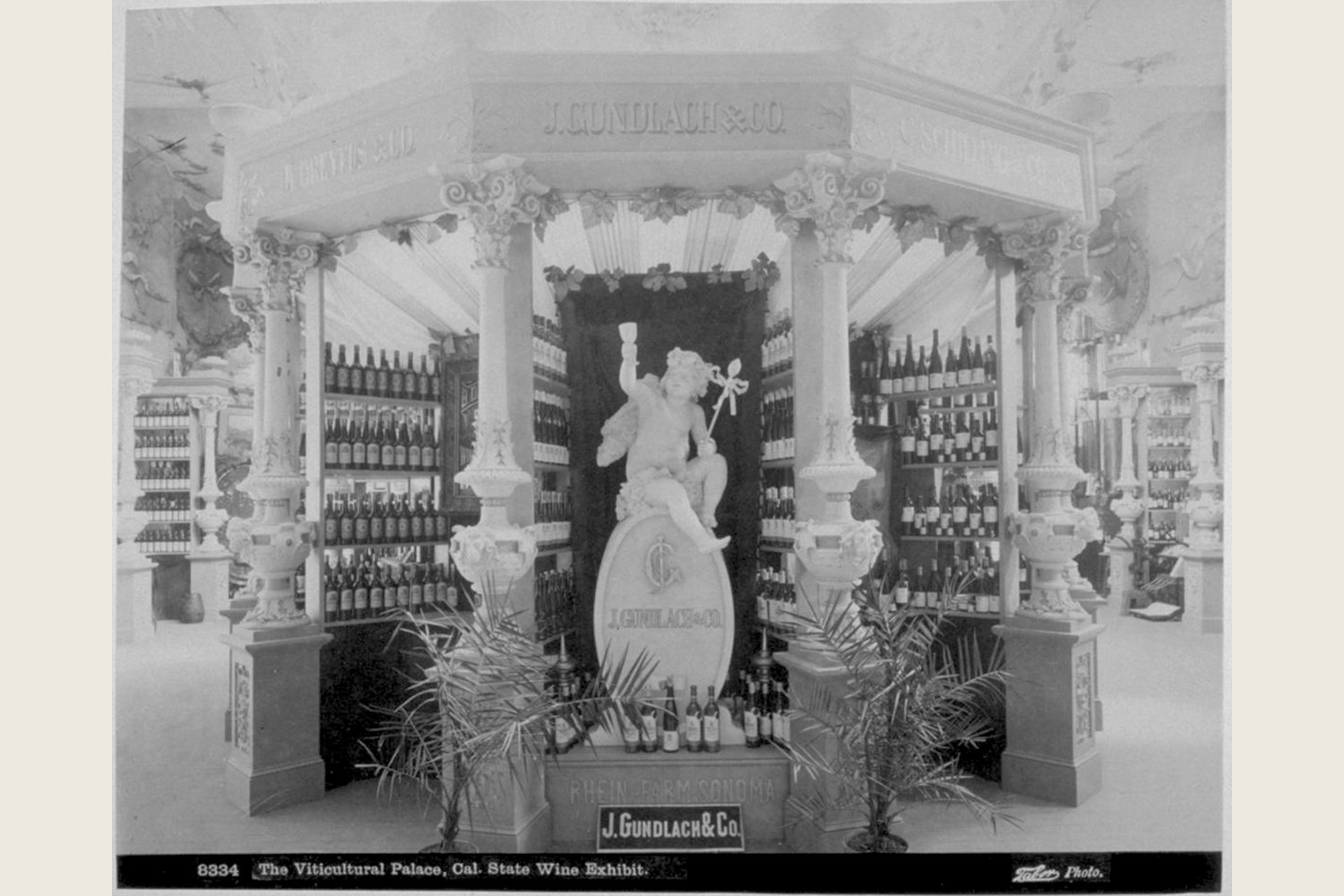
1894 — The J. Gundlach & Co. stand at the Viticultural Palace, Midwinter Exposition 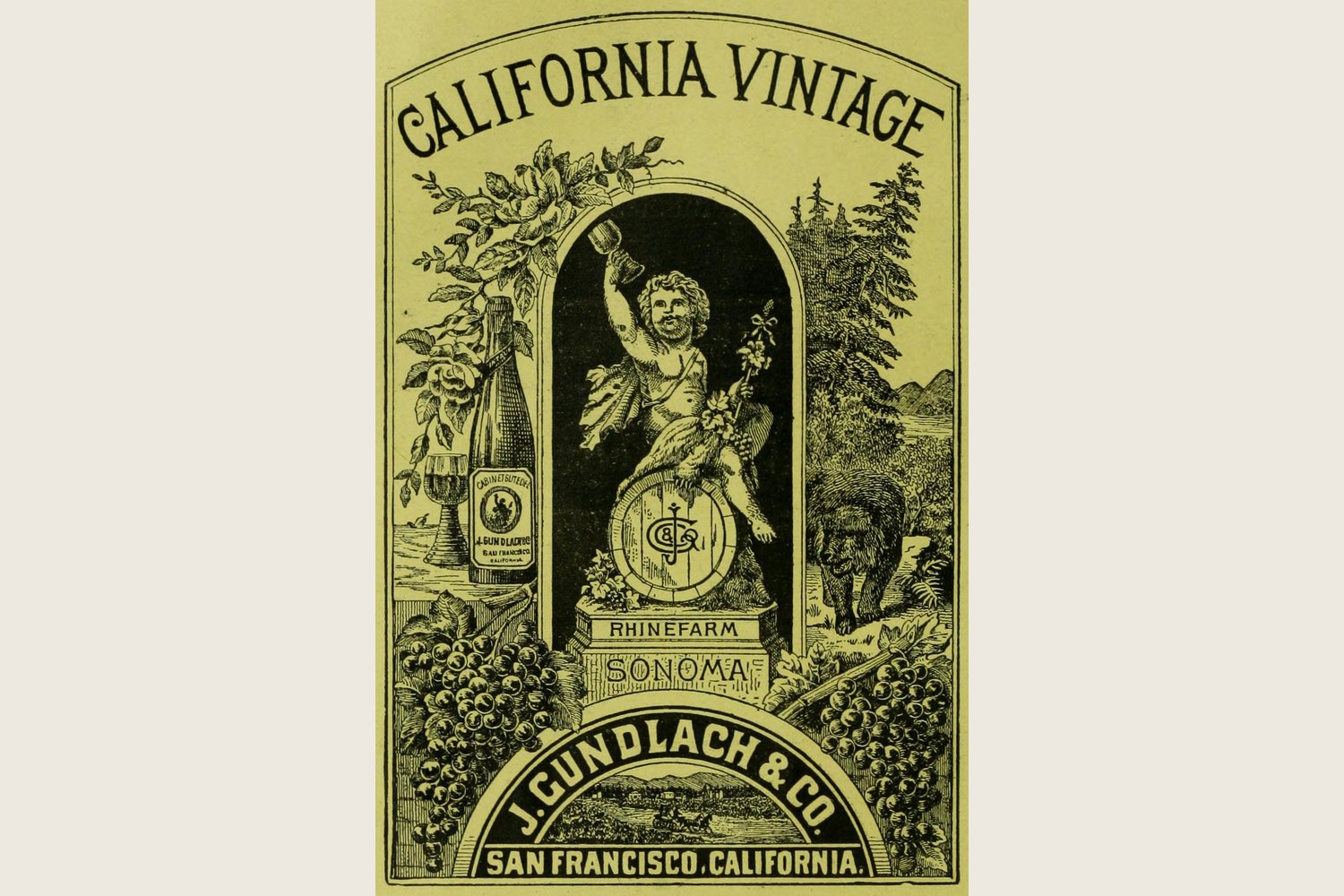
1889 — A Rhinefarm California Vintage label Known for
- Gewürztraminer — the house signature, planted at Rhinefarm since the 1970s and now Regenerative Organic Certified
- Mountain Cuvée — the estate Bordeaux-varietal red blend
- Rhinefarm Cabernet Sauvignon, and the Vintage Reserve bottling made since 1981
- Merlot, Zinfandel, Tempranillo and Pinot Noir off the estate
In the glass
Gundlach Bundschu Dry Gewürztraminer, Estate Vineyard · 2025
The house signature and the opener of both flights. Regenerative Organic Certified estate fruit off the cool valley floor, and dry rather than the off-dry style the grape usually gets in California — lychee, rose petal and white pepper on the nose, then a lean, mineral finish.
Gundlach Bundschu Heritage Chardonnay, Estate Vineyard · 2022
561 cases. A single-block bottling off the Huichica clay-loam on the valley floor, where the fog holds the acid up. Restrained rather than buttery.
Gundlach Bundschu Heritage Pinot Noir, Estate Vineyard · 2022
256 cases — the smallest wine in the flight. Estate Pinot from the same cool lower blocks as the Chardonnay.
Gundlach Bundschu Heritage Merlot, Estate Vineyard · 2019
279 cases, and the oldest wine poured. Rhinefarm Merlot off the volcanic slopes of Arrowhead Mountain, with six years in bottle behind it.
Photographed on the January 2026 visit and again on 22 August 2026 — the Rhinefarm Classic and Collector flights, the Pinot Noir block and the vines a few weeks off harvest.
Cline Cellars
Sonoma, CA · 1982 — Fred & Nancy Cline; in Carneros since 1989 · Napa & Sonoma Wine Country
A 350-acre former horse ranch on Arnold Drive with spring-fed ponds, willows and an 1850s farmhouse for a tasting room — the least formal stop in Carneros and the easiest one to bring children to. Fred Cline started in Oakley in 1982 with Contra Costa vines planted in the 1880s, still on their own roots in sand too deep for phylloxera, and was one of the original Rhone Rangers. The barn beside the picnic lawn holds the complete set of scale models of the twenty-one California missions built for the 1939 world's fair on Treasure Island.
The story
Fred Cline learned to make wine from his grandfather, Valeriano Jacuzzi — the same Jacuzzi family that built aircraft propellers, then water pumps, then the bath. When his grandfather left him land in Oakley in 1982, what came with it was old Contra Costa vineyard: Mourvèdre, Zinfandel and Carignane planted in the 1880s in sand so deep that phylloxera never took hold, still on their own roots a century later.
Those vines made the name. Fred and Nancy Cline were among the original Rhône Rangers, the small group of California growers who argued in the 1980s that Syrah, Mourvèdre, Viognier and Marsanne belonged here as much as Cabernet did.
In 1989 they bought a 350-acre former horse ranch on Arnold Drive in Sonoma Carneros and moved the winery to it. A bronze plaque on the property records what happened there first: on 4 July 1823 Padre Altimira raised a cross and said Mass on this ground while scouting a site for what became Mission San Francisco Solano, the twenty-first and last of the California missions. The Coast Miwok had camped at the springs long before that. The tasting room is the 1850s farmhouse, with willows and spring-fed ponds around it and the estate vines behind.
The oddest thing on the property is the California Missions Museum: the complete set of scale models of all twenty-one Spanish missions, hand-built for the 1939 Golden Gate International Exposition on Treasure Island, which the Clines rescued and now keep in a barn beside the picnic lawn.
Known for
- Ancient Vines Mourvèdre and Zinfandel — from the 1880s Oakley plantings
- Ancient Vines Carignane — the third of the old Contra Costa trio
- Cool Climate Pinot Noir and Chardonnay off the Sonoma Carneros estate
- Syrah, Viognier and Marsanne — the Rhône varieties the house helped introduce
 Livermore Valley
Wente Vineyards
Livermore, CA — the estate on Arroyo Road · 1883 — C. H. Wente, a Hanover immigrant · Livermore Valley
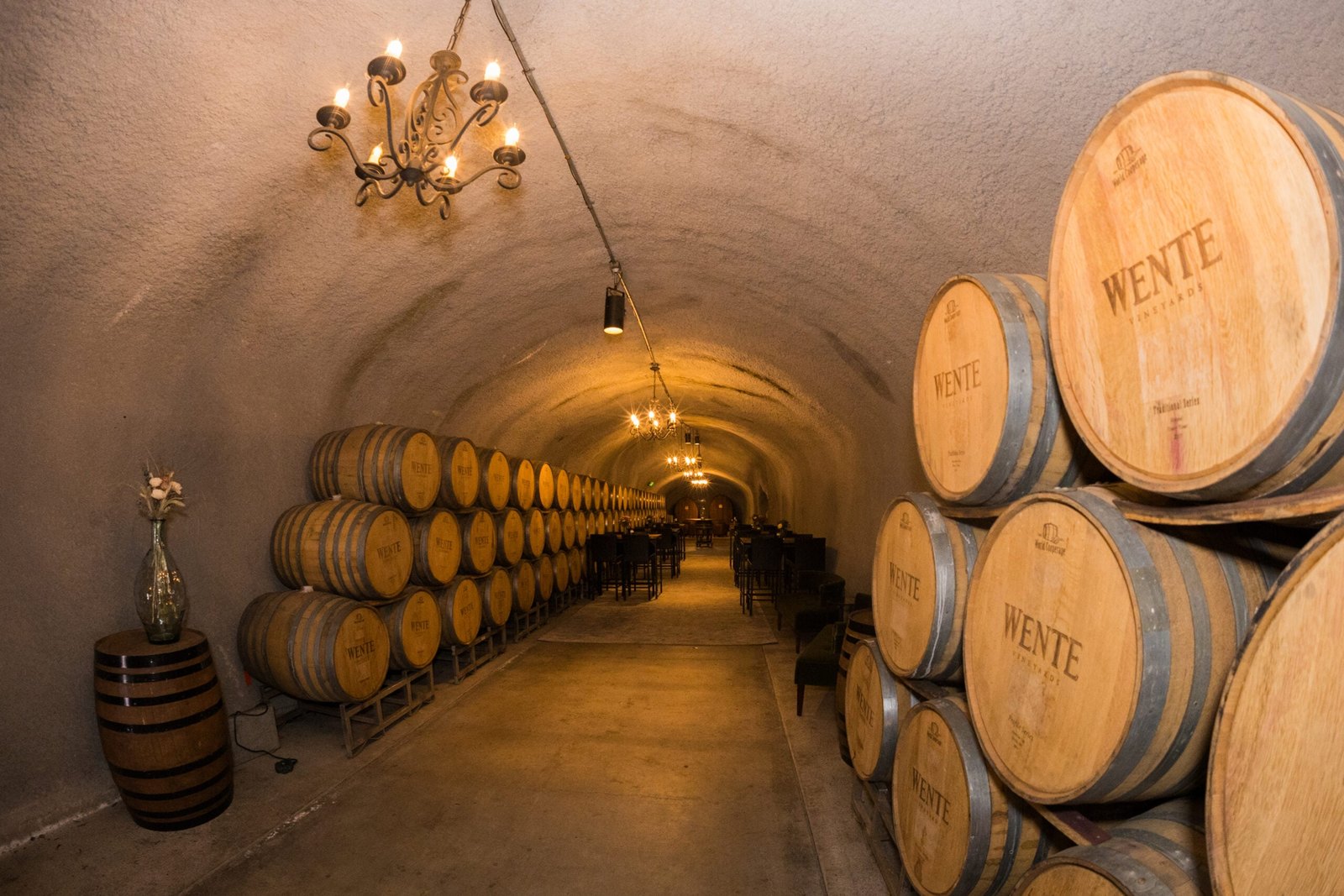
The oldest continuously family-owned and operated winery in the United States, five generations in, twenty-five minutes from home. The Arroyo Road estate is the old Cresta Blanca property — sandstone caves cut into the hillside in the 1880s — and now carries the restaurant, the summer concert lawn and the only championship golf course on a working winery. The family's other lasting mark is genetic: the Wente clone of Chardonnay, brought back from Montpellier in 1912, is the parent of most Chardonnay planted in California.
Then & now
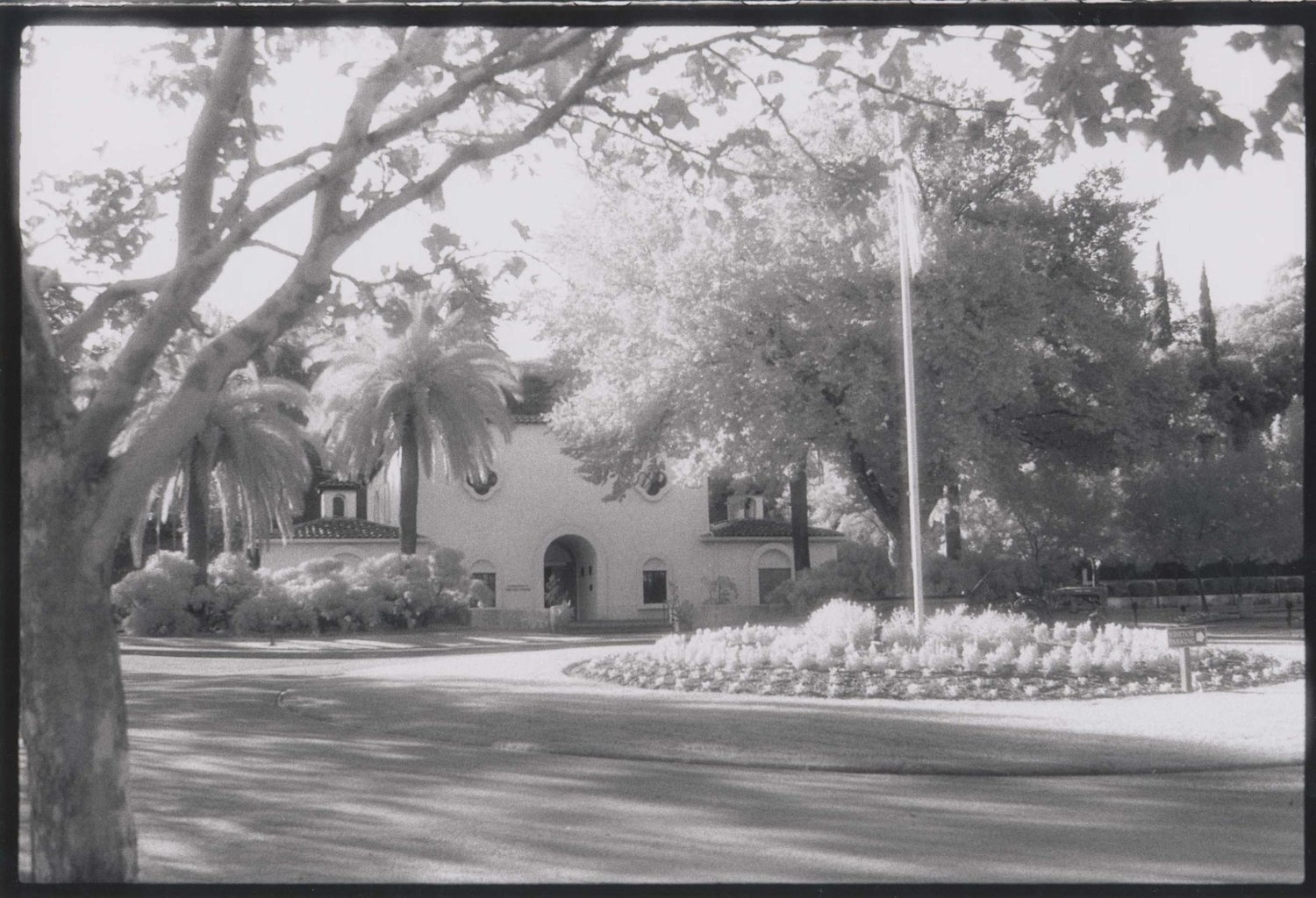
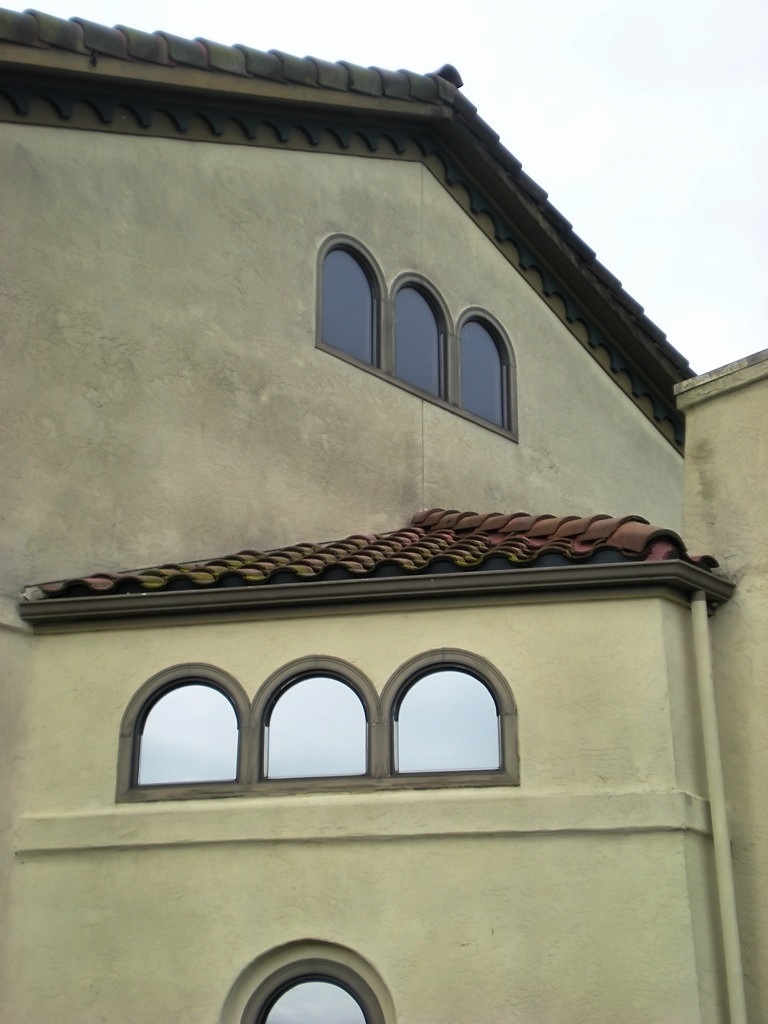
Then · c. 1940s Now The Wente winery, Livermore Valley — Wente Vineyards family archive
The story
Carl Heinrich Wente left Hanover for California, learned winemaking working for Charles Krug in Napa, and in 1883 bought forty-seven acres of his own in the Livermore Valley — close enough to San Francisco Bay for the fog and close enough to the transcontinental railroad to ship. Five generations later the family is still there, which makes Wente the oldest continuously family-owned and operated winery in the United States.
Its lasting contribution is a plant. In 1912 C.H.'s son Ernest brought cuttings back from Montpellier in France and planted them in Livermore and at UC Davis. That selection became the Wente clone, and it is the genetic backbone of something like four out of five Chardonnay vines in California today.
Prohibition should have finished them. Instead the family went into cattle and other crops and kept making wine legally for sacramental and medicinal use — they never missed a vintage. When repeal came, Ernest and his brother Herman started putting the grape variety on the label, Sauvignon Blanc in 1932 and Pinot Chardonnay in 1936, years before that was the American norm. The Sauvignon Blanc took a Grand Prize at the 1939 Golden Gate International Exposition.
Wente opened California's first dedicated tasting room in 1969 and effectively invented wine tourism in the Livermore Valley. The estate on Arroyo Road, where the restaurant, the concert lawn and the Greg Norman golf course now sit, was Charles Wetmore's Cresta Blanca — the 1882 winery whose Sauternes-style white won the grand prix at the 1889 Paris Exposition, and whose sandstone caves are still cut into the hillside behind the tasting room.
The archive · 4
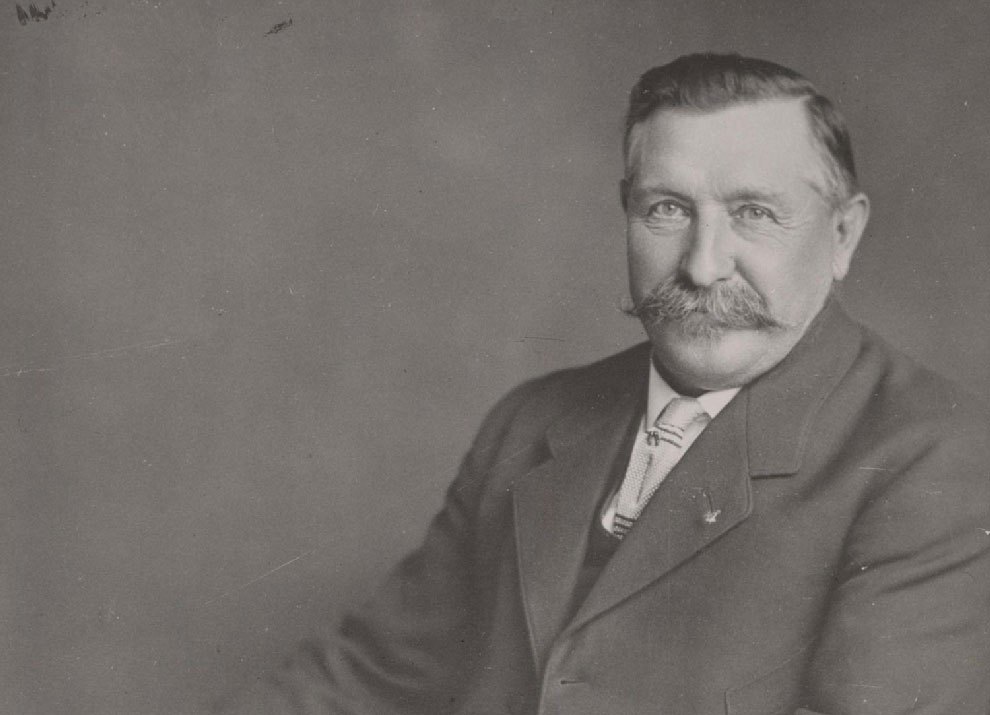
c. 1900 — C. H. Wente, who bought the first forty-seven acres in 1883 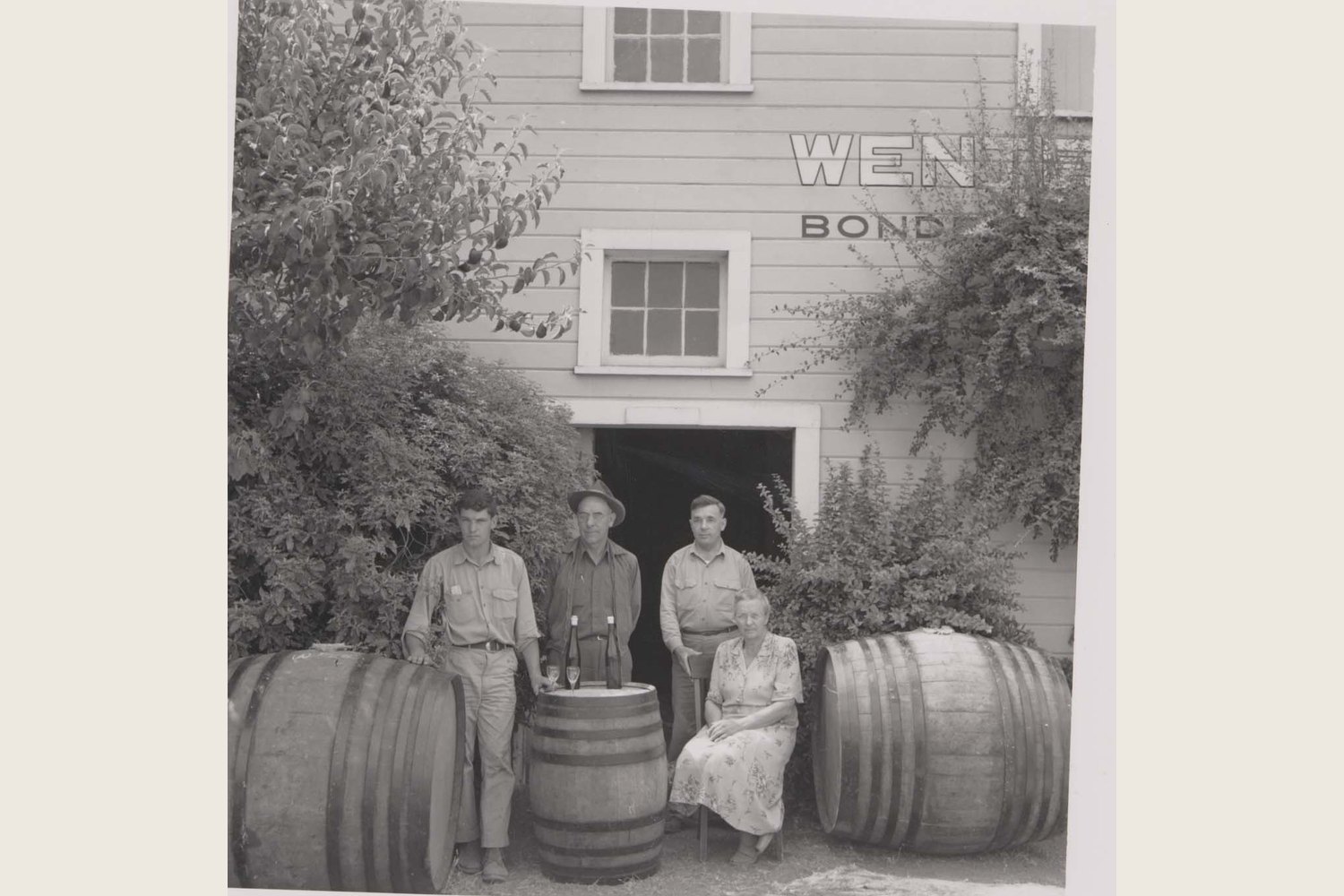
c. 1930s — Karl, Ernest, Herman and Edith Wente at the bonded winery 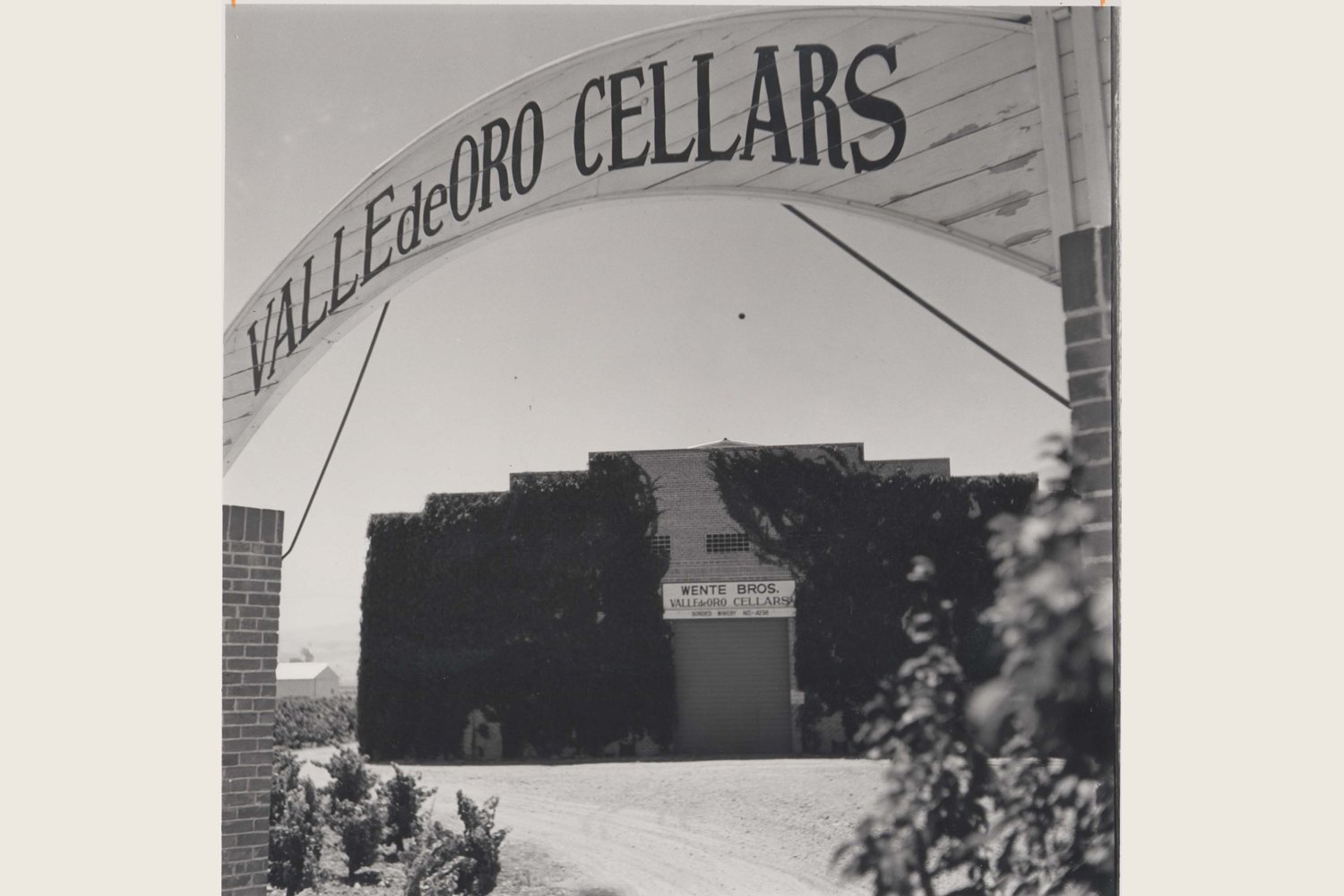
c. 1930s — The Valle de Oro Cellars arch — the label the family used after repeal 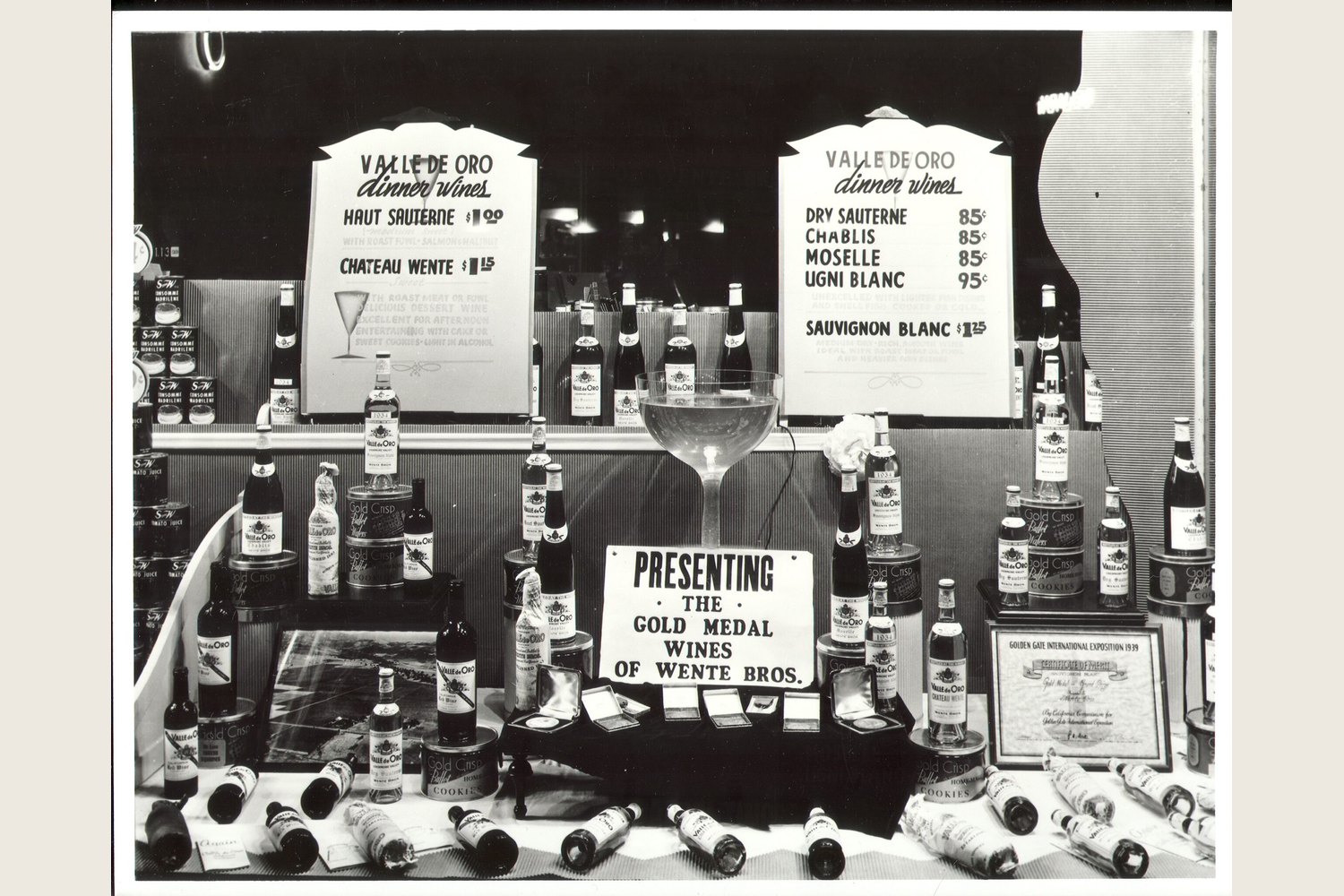
c. 1940 — A Wente Bros gold-medal display Known for
- Chardonnay — the Wente clone, the vine behind most California Chardonnay
- Sauvignon Blanc — varietally labelled since 1932, Grand Prize at the 1939 Golden Gate Exposition
- The Nth Degree — the small-lot flagship series
- Cabernet Sauvignon and Syrah off the Livermore hillsides
 Los Carneros, Sonoma
Gloria Ferrer
Sonoma, CA · 1986 — the Ferrer family of Freixenet, Catalonia · Napa & Sonoma Wine Country
The first sparkling house in Carneros, built by the Ferrer family of Freixenet and named for José Ferrer's wife. Catalan cava method, Carneros fruit, and a hillside terrace that looks south over the vines toward San Pablo Bay — the caves are dug straight into the slope behind the tasting room.
The story
The Ferrer family had been making sparkling wine in Catalonia since the 1860s — Freixenet, at Sant Sadurní d'Anoia, the house that turned cava into an export business. The Spanish Civil War killed Pedro Ferrer and very nearly the company with him; his widow Dolores kept it alive, and their son José Ferrer rebuilt it.
In 1982 José and his wife Gloria began buying land in Carneros, and in 1986 they opened the first sparkling house in the district. He named it for her.
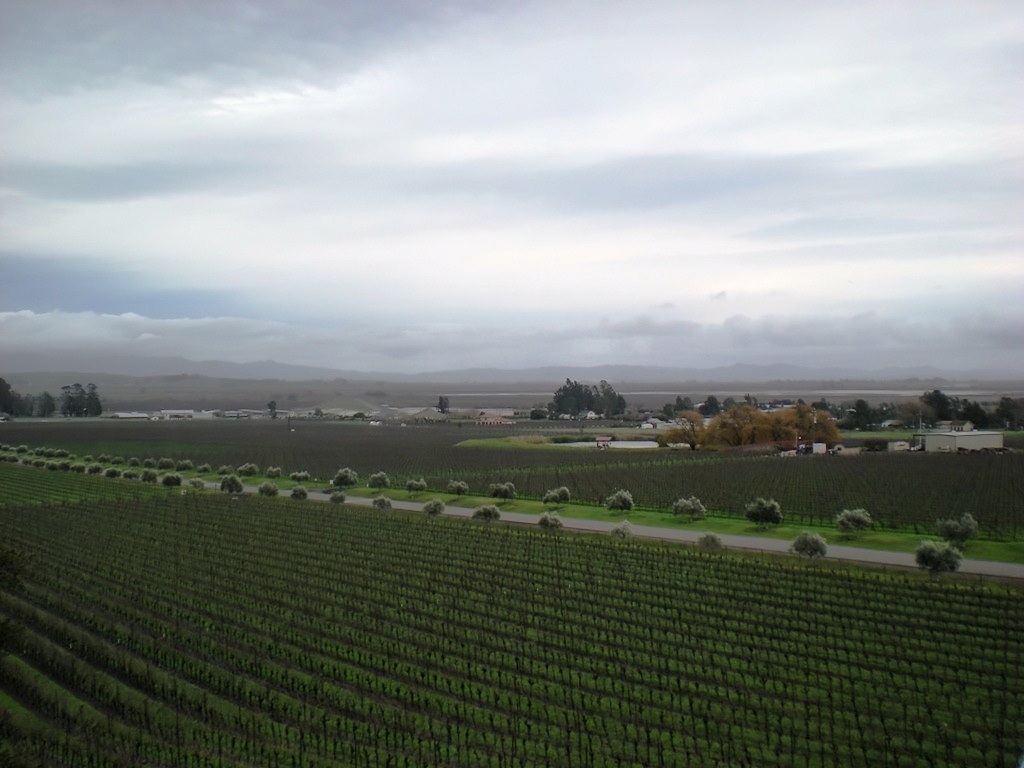
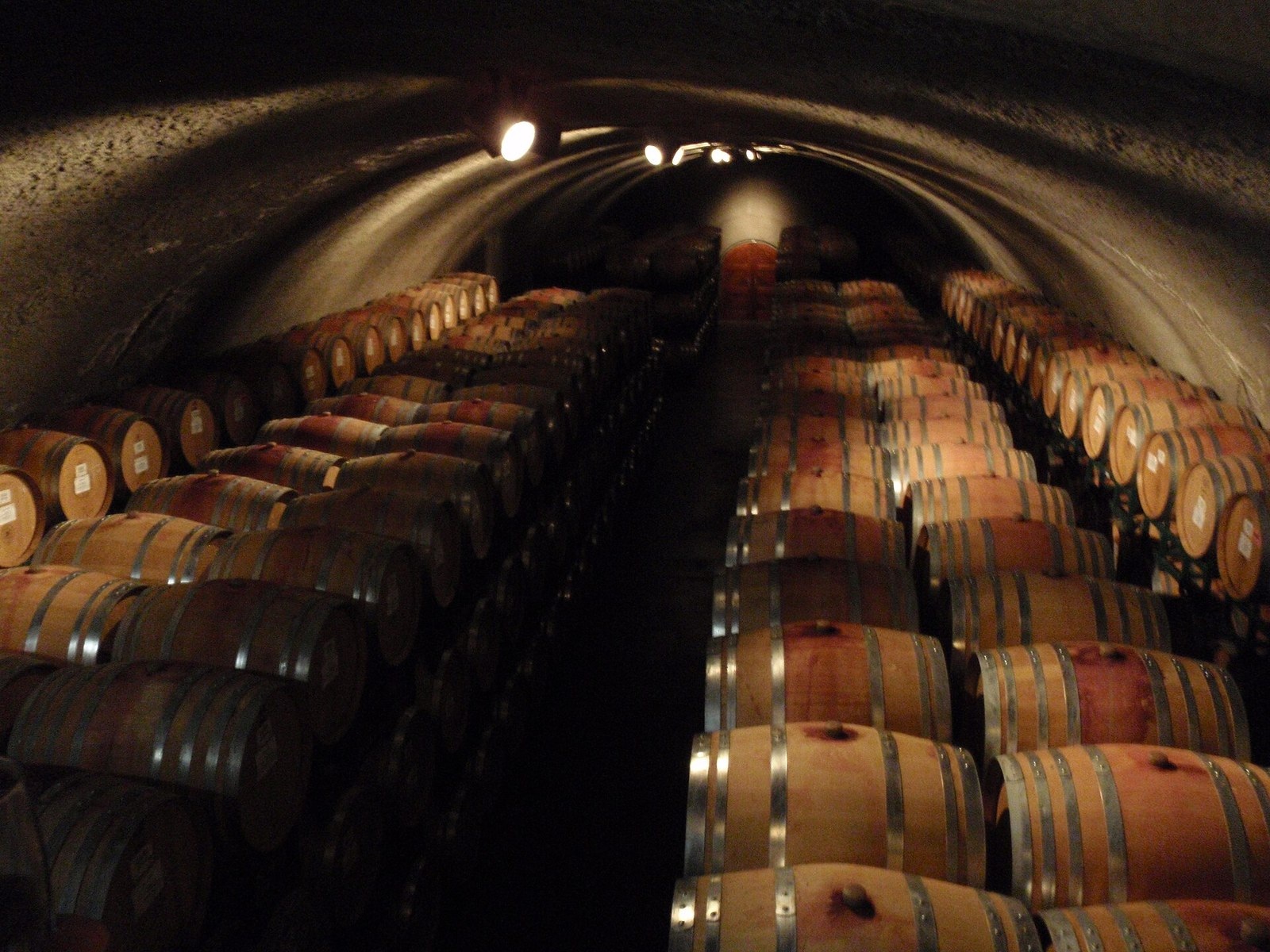
The method is Catalan rather than Californian: the same second fermentation in bottle, the same long lees ageing, and caves driven straight into the hillside behind the tasting room to hold them. The terrace above looks south over the estate vines toward San Pablo Bay, and the fog that rolls off it most mornings is the whole reason the family planted here.
Known for
- Sonoma Brut — the everyday estate sparkling
- Blanc de Noirs — Pinot Noir-led, the house signature
- Va de Vi — the off-dry blend named 'it's about wine' in Catalan
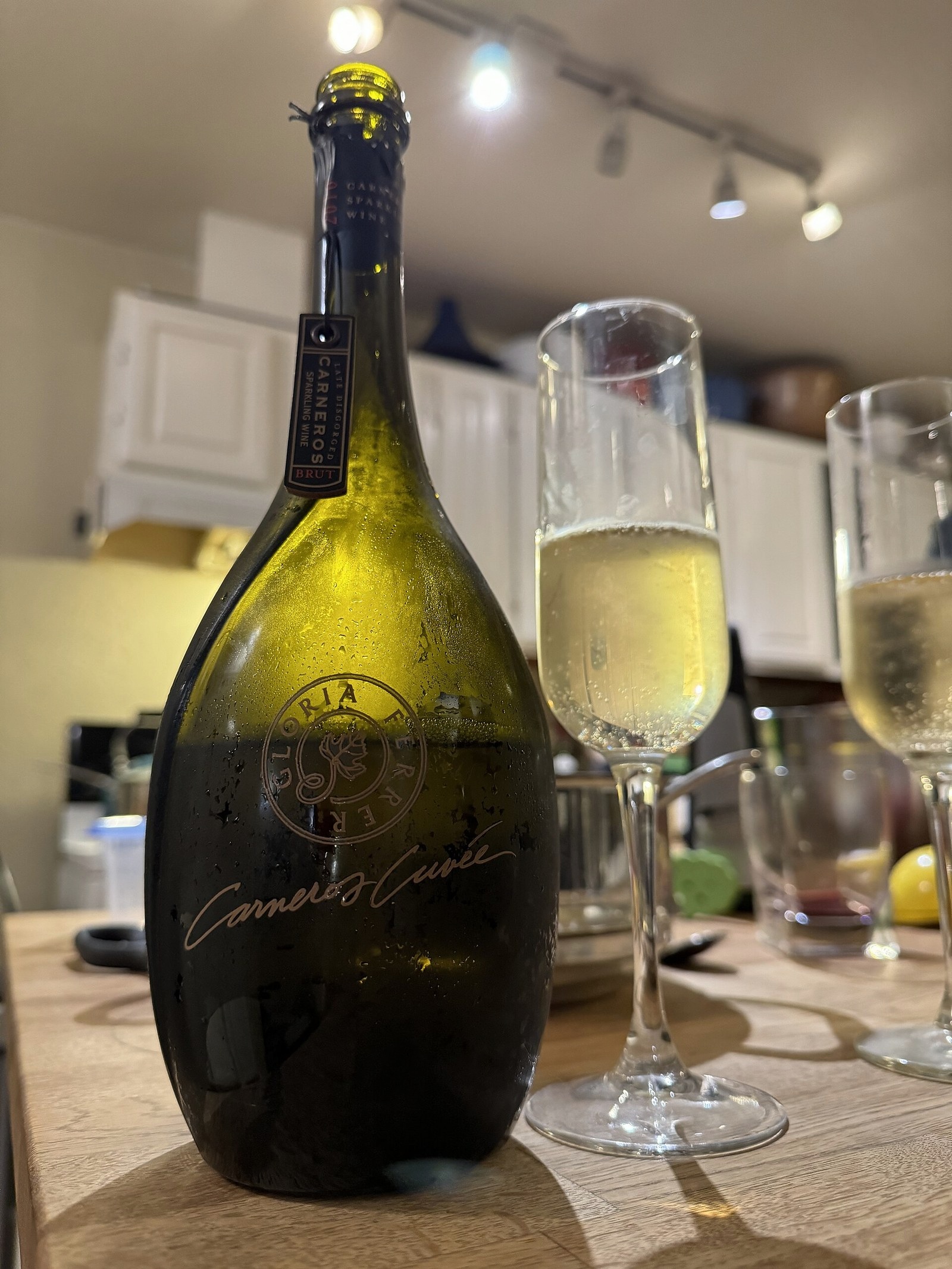
- Royal Cuvée and Carneros Cuvée — the aged tête de cuvée bottlings
Photos · 4
 Los Carneros, Napa
Domaine Carneros
Napa, CA · 1987 — founded by Champagne Taittinger · Napa & Sonoma Wine Country
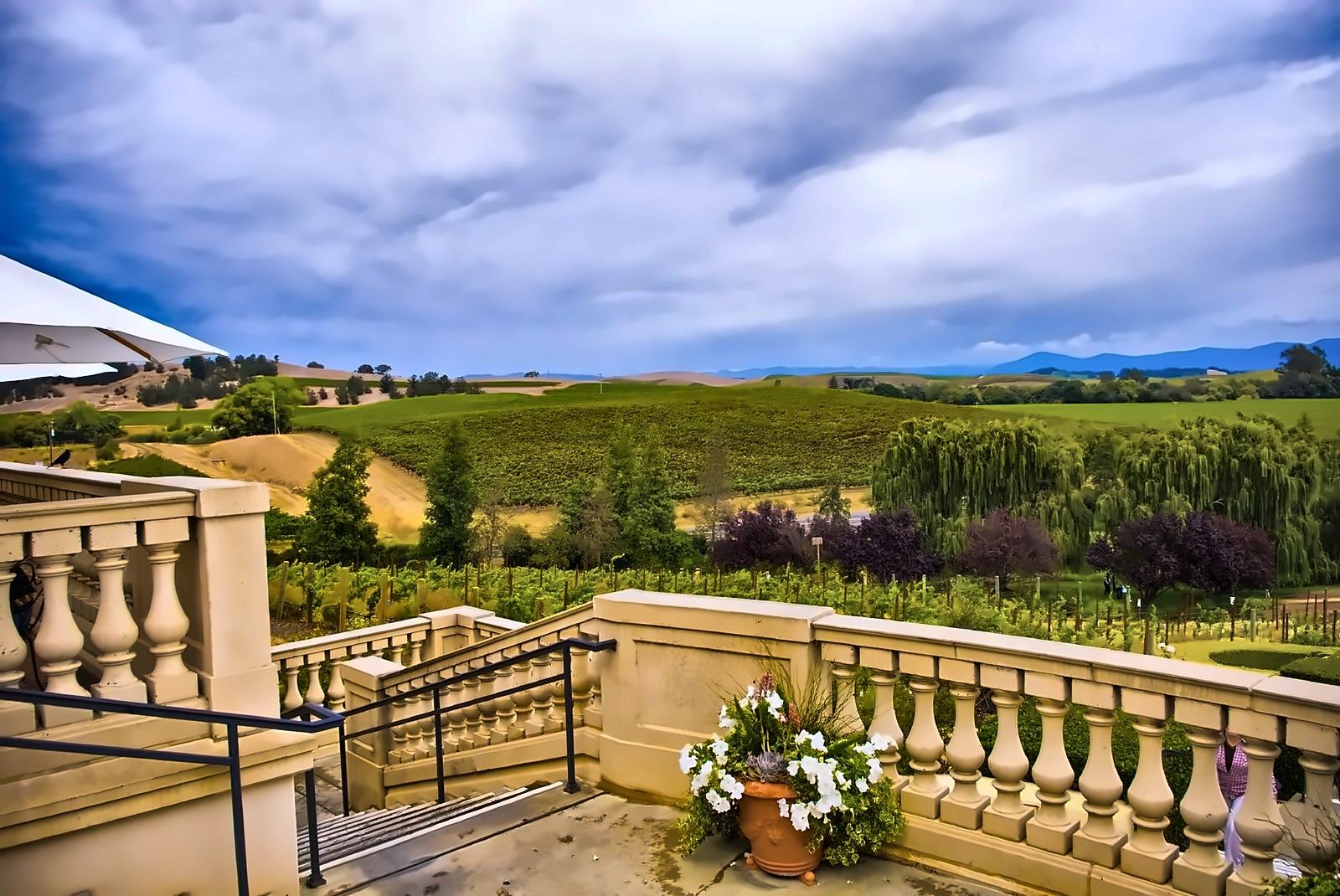
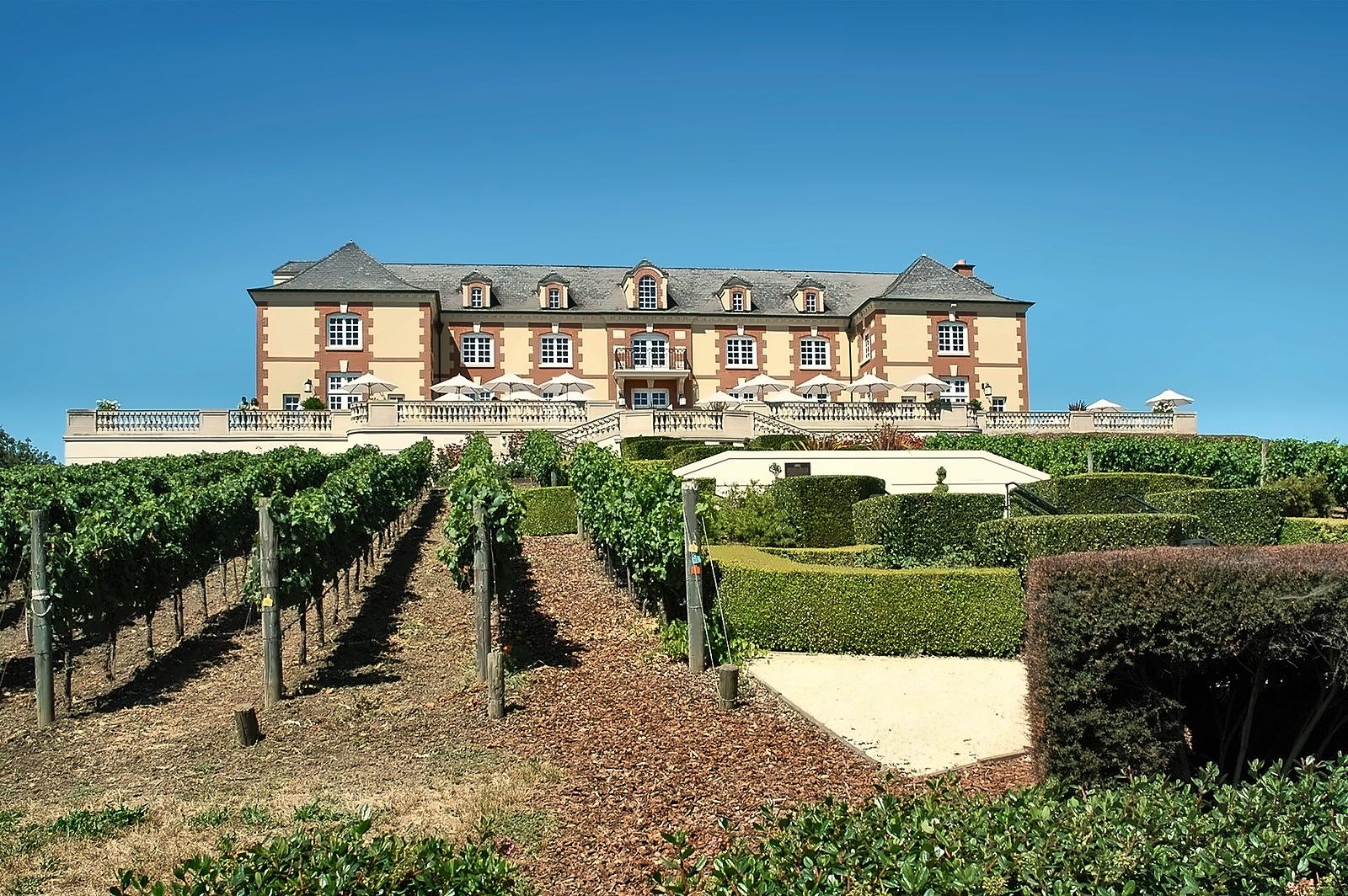
Taittinger's California outpost, and the most theatrical arrival in Carneros — a château modelled on the Taittinger family's Château de la Marquetterie in Champagne, sitting alone on a rise above the vines, where you are seated on the terrace and served by the glass or the flight rather than lining up at a bar.
The story
Champagne Taittinger spent most of the 1980s looking for the right piece of California. Claude Taittinger settled on Los Carneros in 1987 for exactly the reason everyone else had ignored it: it is too cold to ripen Cabernet, which is precisely what high-acid Chardonnay and Pinot Noir for sparkling wine need.
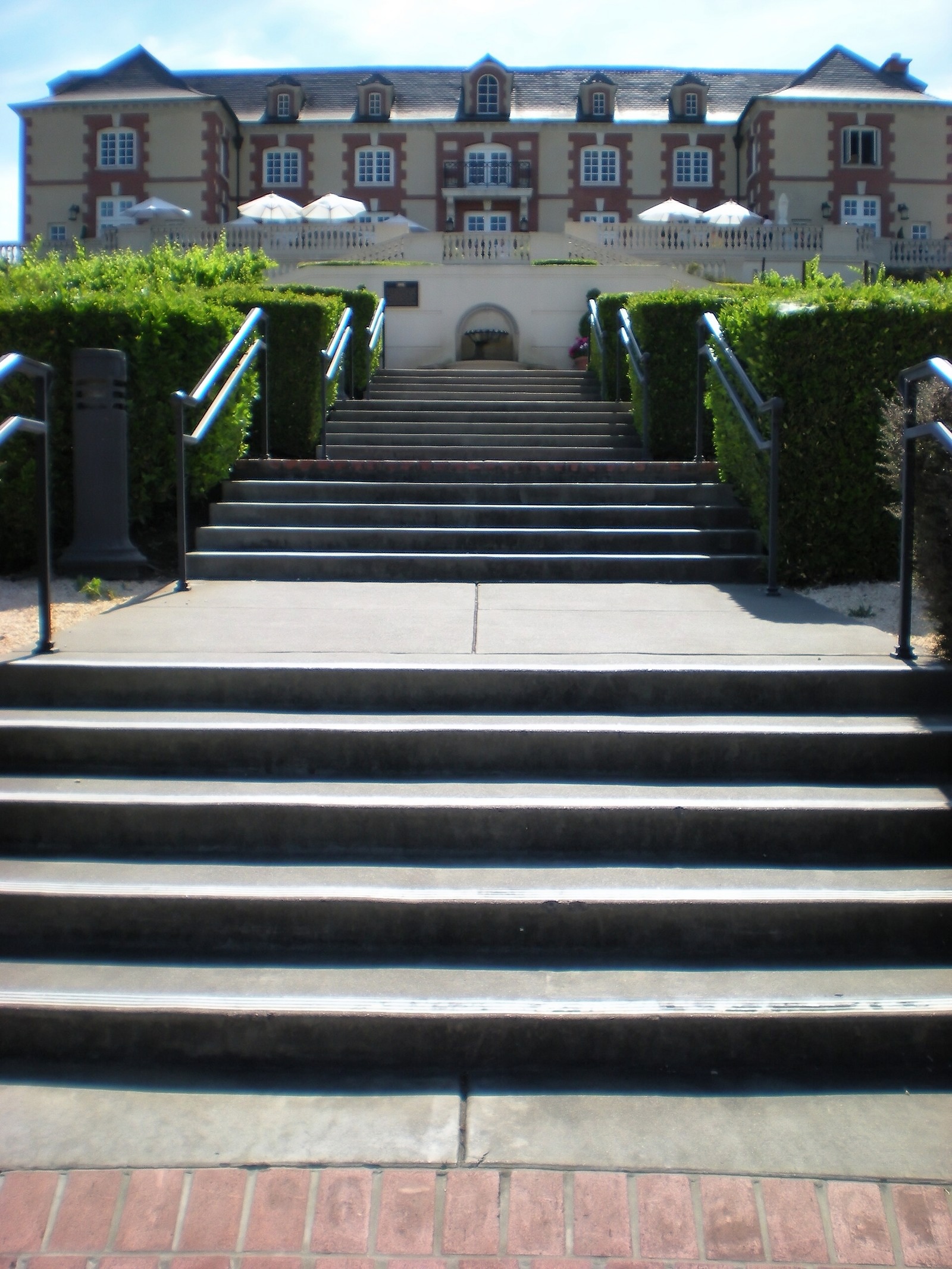
The château above the vines is a deliberate quotation — a scaled reading of Château de la Marquetterie at Pierry, the Taittinger family's own house in Champagne, right down to the double staircase you climb to the terrace.
Eileen Crane was hired as founding winemaker and stayed thirty-two years, long enough to be called the doyenne of American sparkling wine. Everything is méthode traditionnelle, bottle-fermented and hand-riddled; the tête de cuvée, Le Rêve Blanc de Blancs, is all Carneros Chardonnay. Still Pinot Noir came later, and the estate vineyards are now certified organic.
Known for
- Brut Cuvée — the estate's classic méthode traditionnelle sparkling
- Brut Rosé — Pinot-dominant, one of California's benchmark sparkling rosés
- Le Rêve Blanc de Blancs — the tête de cuvée, 100% Chardonnay
- Estate Pinot Noir — the still wine, from the same cool Carneros fruit
Photos · 4
Trinitas Cellars
Napa, CA — the estate cave at the Meritage Resort · 2002 — the Busch family · Napa & Sonoma Wine Country
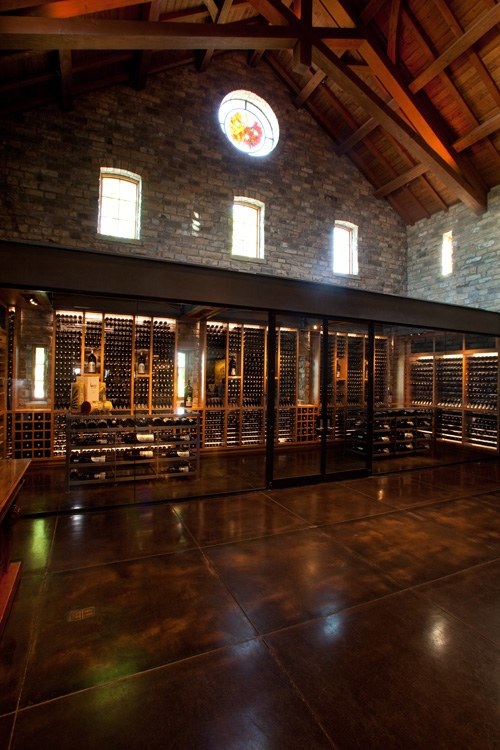
A small family house named for the three things it was founded on — faith, family and friends. The tasting room is underground, in the estate cave dug into the hillside beneath the Meritage Resort's vineyard on the Napa valley floor. Trinitas built its reputation buying fruit from old, nearly-forgotten vineyard blocks that bigger wineries had passed over.
The story
Tim and Steph Busch founded Trinitas in 2002 and named it for the three things they said the business stood on — faith, family and friends. It is a small house by Napa standards and has never owned much vineyard land.
Its reputation was built instead on fruit nobody else wanted: old, nearly forgotten blocks in Contra Costa County, Amador and Napa, some of them century-old Zinfandel and Mourvèdre on their own roots, which the big houses had passed over because the yields were tiny and the rows were too narrow for a modern tractor.
The tasting room is not a château but a cave — dug into the hillside beneath the Meritage Resort's estate vineyard on the Napa valley floor, so you taste underground at cellar temperature with the barrels a few feet away.
Known for
- Old-vine Zinfandel — the wine that made the name, from century-old blocks
- Cabernet Sauvignon — the Napa flagship
- Petite Sirah and the 'Trinitas' red blend
- Meritage — the Bordeaux-varietal blend
In the glass
Trinitas Cabernet Sauvignon, Napa Valley
A warmer, riper, more openly fruit-forward Napa Cab than the Oakville classics — black plum and blackberry jam up front, cocoa and toasted French oak behind it, a touch of vanilla and sweet spice. Softer acid, rounder tannin, generous rather than structured. Drinks well young; the cave setting flatters it.
 Oakville
Silver Oak
Oakville, CA · 1972 — Justin Meyer & Ray Duncan · Napa & Sonoma Wine Country
A house that makes exactly one thing. Silver Oak has bottled nothing but Cabernet Sauvignon since 1972, ages every vintage in American oak from its own cooperage rather than French barriques, and holds each release back until it is ready to drink on the day it ships. The Oakville winery is built from reclaimed stone and is the valley's most-visited single-varietal estate.
The story
Silver Oak started in 1972 with a handshake between two men who had no business being partners. Ray Duncan was a Denver oil and land man who had been buying Napa vineyard ground; Justin Meyer was a former Christian Brothers monk who had spent a decade making wine for the order at Mont La Salle. They agreed on one idea — make Cabernet Sauvignon and nothing else, and do it better than anyone.
The first winery was a dairy barn on Oakville Cross Road, and the first vintage, in 1972, came from Alexander Valley rather than Napa. That split has stayed: the Alexander Valley bottling is the softer, earlier-drinking one, the Napa Valley bottling the firmer.
Two decisions made the house style. Every wine is aged in American oak, never French — and in 1994 Silver Oak bought its own cooperage in Higbee, Missouri, so it could choose the trees, air-season the staves for two years and set the toast itself. And no vintage is released until it is ready to drink, which means the bottle you carry out of the tasting room already has five or six years on it.
Justin Meyer retired in 2001 and sold his half to the Duncans; Ray's sons David and Tim run it now. In March 2006 a fire started by a spark from a contractor's grinder burned the original Oakville winery to the ground, taking the library of old vintages with it. It was rebuilt in reclaimed stone from a Kansas flour mill and reopened in 2008 — the first winery in the world to be certified LEED Platinum, a distinction the Alexander Valley house later matched.
Known for
- Napa Valley Cabernet Sauvignon — the flagship, American-oak aged, released with bottle age
- Alexander Valley Cabernet Sauvignon — the softer, earlier-drinking Sonoma bottling
- Twomey Merlot / Sauvignon Blanc — the sister label
In the glass
Silver Oak Alexander Valley Cabernet Sauvignon
The signature American-oak signature is right there on the nose — coconut, vanilla, sweet cedar and dill over cassis and black cherry. Softer and rounder than the Napa bottling, plush mid-palate, fine-grained tannins already resolved, finishing on mocha and dried herb. Built to be drunk on release rather than cellared.
Silver Oak Napa Valley Cabernet Sauvignon
Darker and more structured than the Alexander Valley — blackcurrant, graphite and cigar box, with the Oakville gravel showing as a firmer tannic spine. The American oak reads as toasted vanilla and baking spice instead of sweet coconut. Long, dry, savoury finish.
Photos · 4